A whitespace opportunity without a strategy
Salesforce identified sales enablement as a major whitespace opportunity — a fragmented $1.3B+ market with no clear leader, and a unique advantage in that Salesforce is where sellers already work every day. But there was no product strategy, no point of view on how to differentiate, and no clear path from market opportunity to shipped product.
Research, acquisition, and a new product in six months
Research that shaped the acquisition strategy
I led user research with sales reps, managers, and ops teams that surfaced three critical insights: reps learn best through hands-on experience (not assigned content), enablement activities aren't tied to performance outcomes, and the fragmented tooling creates a disjointed experience. This research directly informed the decision to acquire LevelJump — a company whose technology tied training programs to Salesforce data and business outcomes.
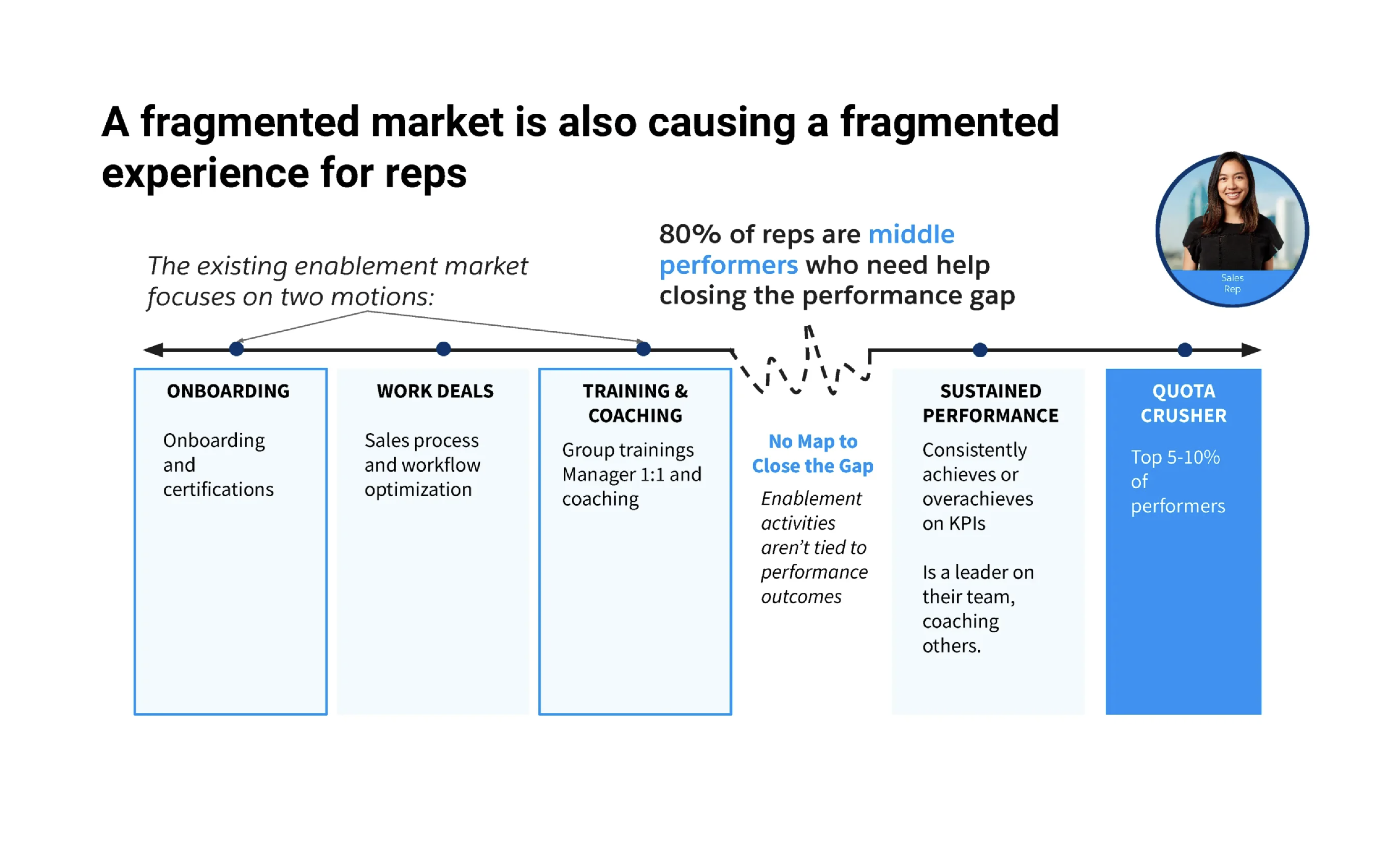
Reframing enablement around outcomes, not content
The market's existing mental model was skills-based learning: assign content, track completion, hope it helps. I led the strategic shift to outcomes-based enablement — where every learning program starts with a measurable business goal (close your first deal in 90 days) and milestones are tracked against real CRM data, not just course completions. This became the product's core differentiator.
"Before we had Sales Programs we just hoped our teams would focus on what we wanted to do during prospecting day. Now we can drive focus, quantify resource attribution, and connect our programs directly to revenue."
— AWS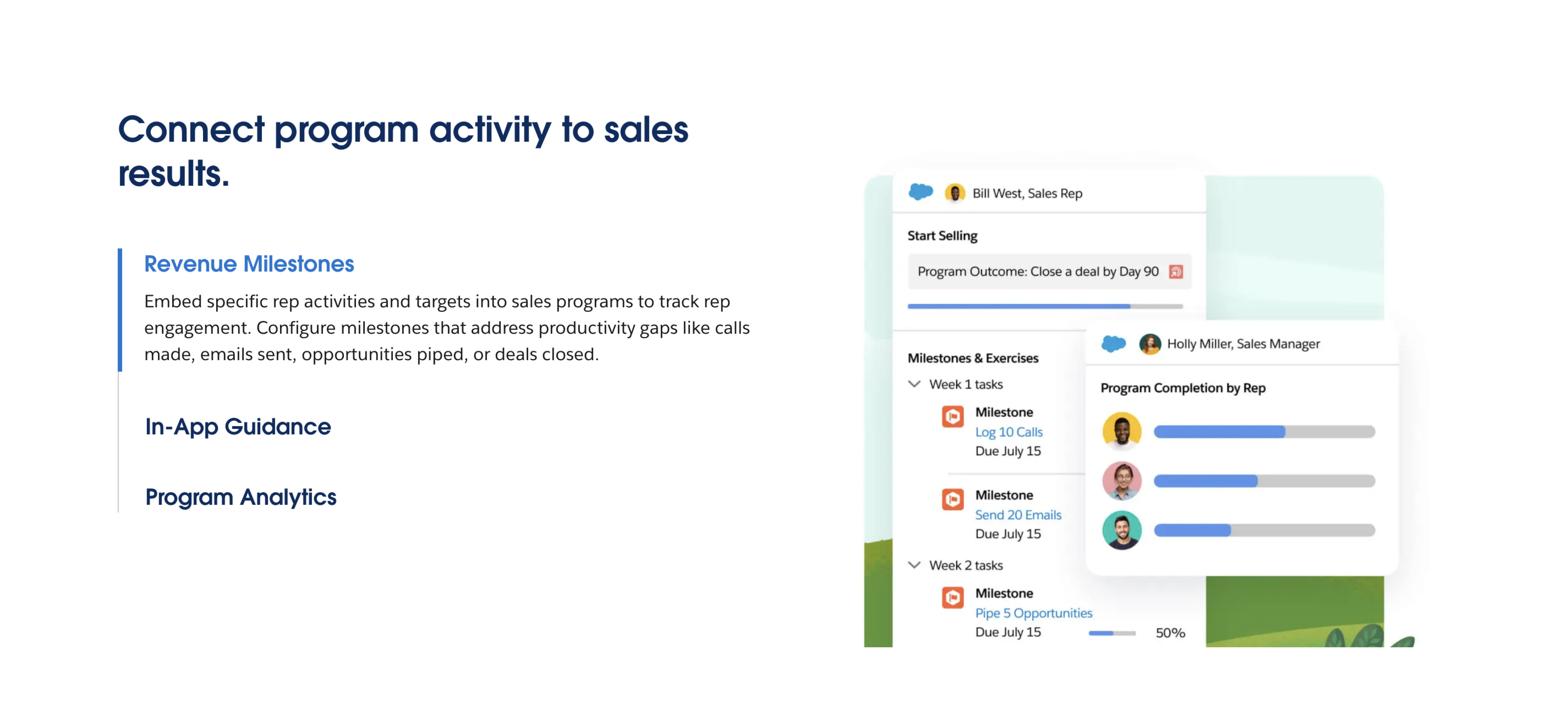
Aligning three teams under one cohesive UX
After the acquisition, I managed a team of 3 designers and partnered with a team of 8 to deliver a unified experience across three previously separate teams — each with different expertise, tools, and emotional investment. I established weekly cross-functional design crits, created a "steel thread" approach to visualize end-to-end flows and interdependencies, and drove alignment on a shared UX within Salesforce's Lightning Design System.
Shipping a new product in two engineering releases
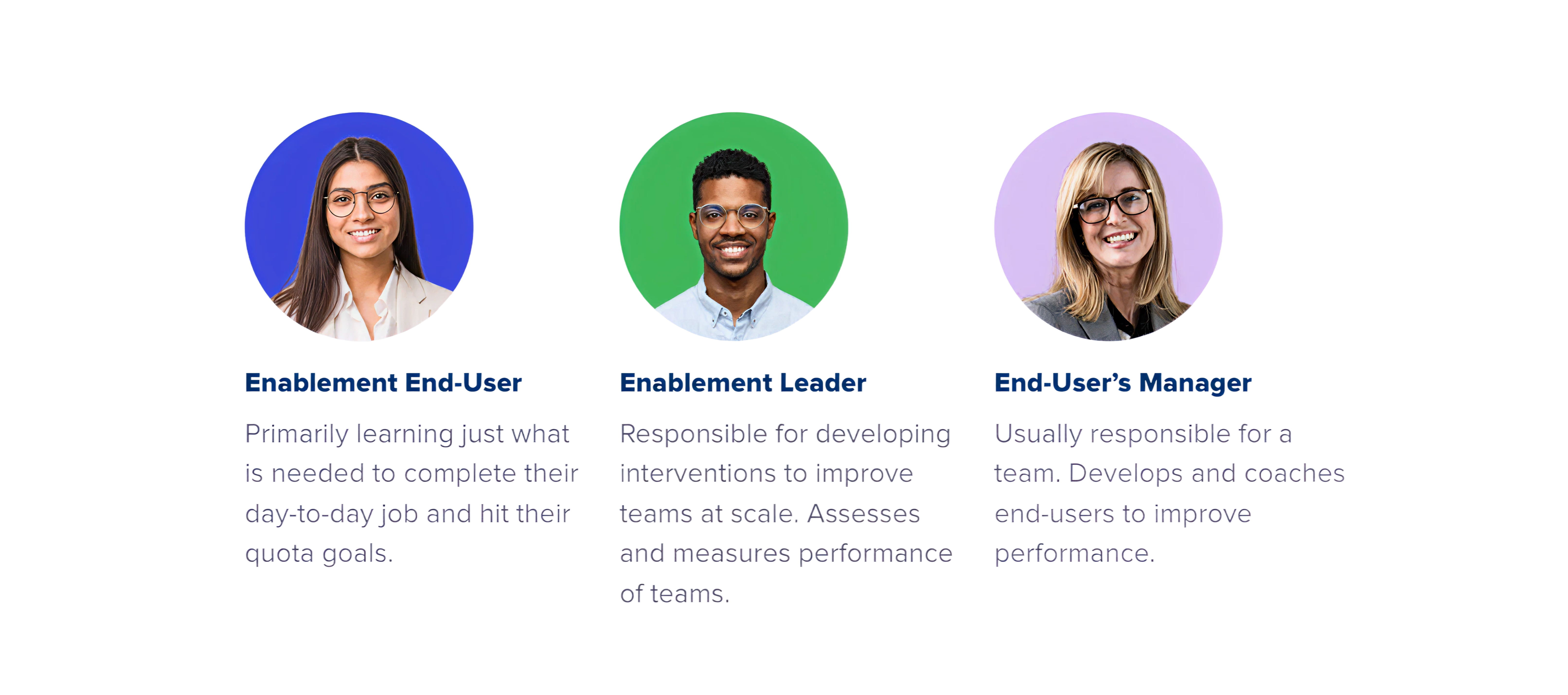
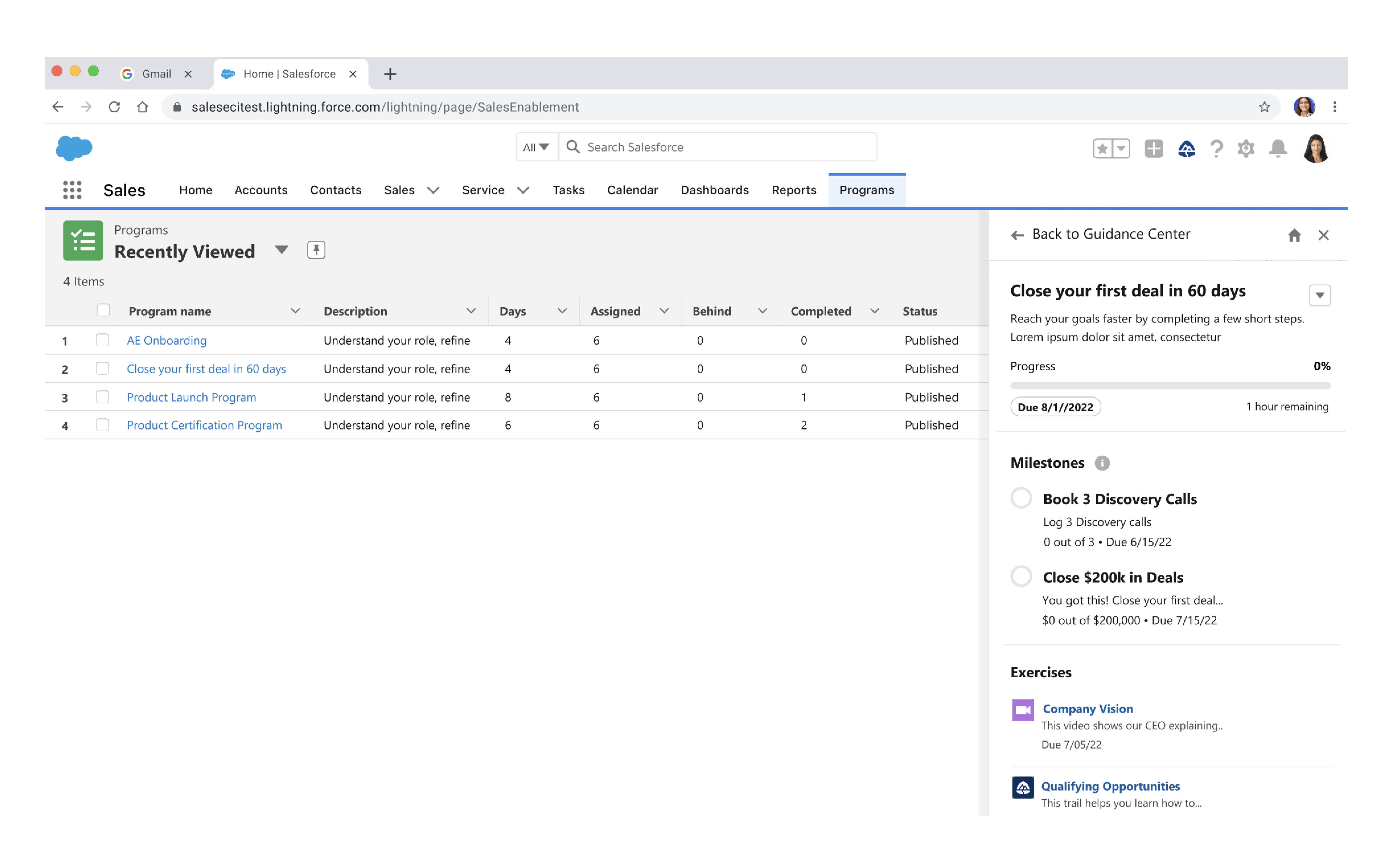
We had six months to go from acquisition to GA. I scoped the MVP around three personas (enablement leader, end-user rep, admin) and focused the UX on three core features: a Program Builder for creating outcome-based learning journeys, a Guidance Center that surfaces learning in the flow of work, and dashboards connecting program engagement to business metrics.
From launch to platform in under two years
On-time launch with rapid adoption
Shipped in Spring 2022. Monthly active users grew to 800 (+40% quarter over quarter) and monthly active orgs grew to 145 (+168% QoQ).
Enterprise customer traction
Grew to 94 active enterprise customers including AWS (40k licenses), Mercedes-Benz, Lowe's, PNC, and Meta.
Platform expansion
What started as a Sales Cloud feature expanded into a platform offering after customers brought service and other use cases — validating the outcomes-based approach as a horizontal capability, not just a sales tool.